Tell us about the job
Takes about a minute. No obligation.
A contractor quoting a water heater replacement in Allen County has to decide what is actually driving the call before they can size the new unit correctly. 63 severe weather events were recorded in Allen County, Ohio between 2015 and 2024. At that rate, severe weather is an occasional event here, not a condition that grinds through equipment year after year. A water heater that has failed or is running poorly in this county almost certainly got there through age, sediment buildup, or a poor original installation. The storm record does not move the needle on that diagnosis, and a good contractor will not let it.
The electrical panel in a house this old was sized for a world that ran on different equipment, and a new water heater draws current against wiring that predates it. Half the homes in Allen County, Ohio were built in 1966 or earlier (2020-2024 ACS 5-year). A contractor putting in a new unit here checks what the panel actually carries before any equipment goes on a truck, because the load a modern electric water heater pulls can exceed what a circuit from that era was ever meant to handle. That service capacity, not the equipment itself, is what sets the scope and the price of the job.
The Parts of a Water Heater an Installation Covers
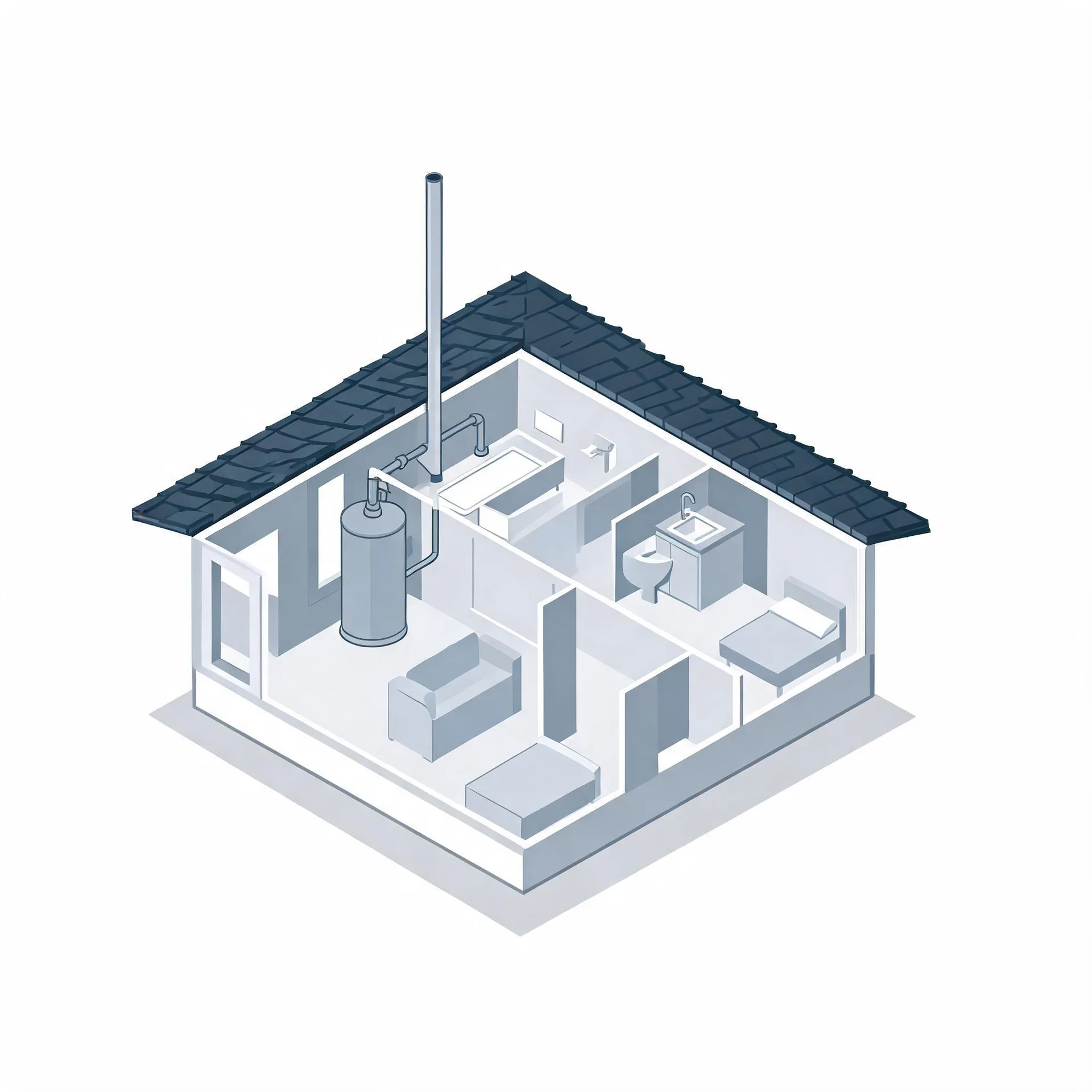
The tank is the piece a homeowner sees first, sitting in a utility room, basement, or closet, and it holds and heats the water supply for the whole house. At the top of the tank, the dip tube brings cold water in while the hot outlet carries heated water out to the rest of the home.
The burner assembly or heating element sits inside or beneath the tank depending on whether the unit runs on gas or electricity, and the thermostat mounted on the tank body tells that element when to fire. A pressure relief valve threads into the side of the tank and a drain valve sits at the base, both of which a contractor addresses as part of a complete installation.
The drawing shows a typical layout, and a licensed contractor determines what applies to the specific setup in your home.
Find a contractor in Allen CountyAllen County, Ohio, by the numbers
63 severe weather events were recorded in Allen County, Ohio between 2015 and 2024.
NOAA National Centers for Environmental Information, Storm Events Database, bulk CSV export, events 2015-01-01 through 2024-12-31.Half the homes in Allen County, Ohio were built in 1966 or earlier (2020-2024 ACS 5-year).
U.S. Census Bureau, 2020-2024 American Community Survey 5-Year EstimatesAllen County, Ohio holds 44,791 housing units (2020-2024 ACS 5-year).
U.S. Census Bureau, 2020-2024 American Community Survey 5-Year EstimatesOwners occupy 67.7% of the occupied homes in Allen County, Ohio (2020-2024 ACS 5-year).
U.S. Census Bureau, 2020-2024 American Community Survey 5-Year EstimatesSevere Weather Events in Allen County
Extreme weather puts direct stress on water heating equipment, shortening its working life and raising the load it carries through recovery cycles. How much stress depends on local conditions, which is why the weather record for this area belongs on a page about water heater installation.
63 severe weather events, 2015–2023. Source: NOAA National Centers for Environmental Information, Storm Events Database.