Tell us about the job
Takes about a minute. No obligation.
A contractor quoting water heater repair in Gallia County starts with the unit itself before blaming outside conditions. 88 severe weather events were recorded in Gallia County, Ohio between 2015 and 2024. That puts this area in the moderate range, meaning severe weather is a real but occasional factor in the life of residential equipment here. When a water heater gives out, a contractor checks sediment buildup, the anode rod, and the condition of fittings first. Those are what wear out on a schedule that has more to do with water quality and maintenance history than with storm seasons.
Sediment buildup, failing elements, and corroded anode rods are common enough findings in any water heater, but in Gallia County the repair question that shapes the bill is whether the parts a given unit requires are still manufactured. Half the homes in Gallia County, Ohio were built in 1981 or earlier (2020-2024 ACS 5-year). Equipment installed in houses built by that year has frequently been replaced once or more already, and the replacement units themselves are aging. A contractor who opens a water heater here checks the part numbers before quoting the fix, because a repair that looks straightforward on the surface becomes a sourcing problem when the manufacturer has discontinued the component.
The Parts of a Water Heater a Contractor Checks First
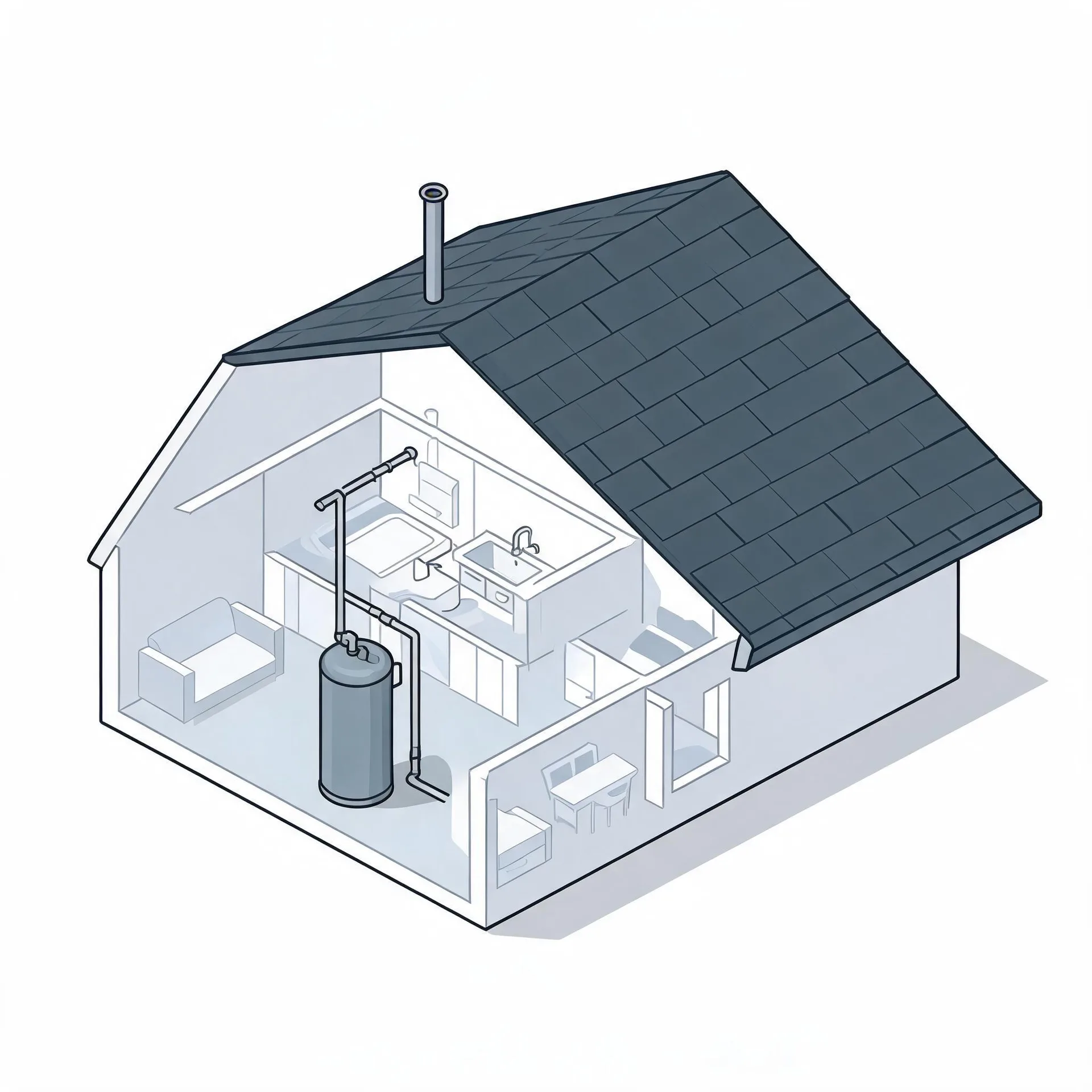
The tank is the piece a homeowner notices, sitting in a utility room, basement, or closet and holding the home's supply of hot water. The burner assembly or heating elements sit inside or beneath it and are often where a repair starts. The thermostat, mounted on the tank's exterior, tells those elements when to fire.
The pressure relief valve sits on the side of the tank and opens if pressure inside climbs too high. The anode rod runs down into the tank from the top and slows corrosion of the lining. Both get examined when a contractor is tracing a problem that the more obvious parts do not explain.
The drawing shows a typical layout, and a licensed contractor determines which parts apply to the specific unit and setup in your home.
Find a contractor in Gallia CountyGallia County by the numbers
88 severe weather events were recorded in Gallia County, Ohio between 2015 and 2024.
NOAA National Centers for Environmental Information, Storm Events Database, bulk CSV export, events 2015-01-01 through 2024-12-31.Half the homes in Gallia County, Ohio were built in 1981 or earlier (2020-2024 ACS 5-year).
U.S. Census Bureau, 2020-2024 American Community Survey 5-Year EstimatesGallia County, Ohio holds 13,464 housing units (2020-2024 ACS 5-year).
U.S. Census Bureau, 2020-2024 American Community Survey 5-Year EstimatesOwners occupy 74.7% of the occupied homes in Gallia County, Ohio (2020-2024 ACS 5-year).
U.S. Census Bureau, 2020-2024 American Community Survey 5-Year EstimatesSevere Weather Events in Gallia County
Gallia County's weather puts real load on water heaters, forcing the equipment to work harder and recover faster after each event. How much stress a unit accumulates over time is a local question, and the record below gives that context.
88 severe weather events, 2015–2024. Source: NOAA National Centers for Environmental Information, Storm Events Database.