Tell us about the job
Takes about a minute. No obligation.
A water heater working through years of severe weather carries a different wear history than one that has simply aged quietly. 100 severe weather events were recorded in Belmont County, Ohio between 2015 and 2024. At that rate, the load on a water heater is real and recurring, and a contractor here expects to find stress on components that cycle hard during weather events alongside the ordinary accumulation of sediment and corrosion. A failed element or a leaking pressure-relief valve in this county could reflect either, and a contractor has to distinguish between them before pricing the job, because the fix and the follow-on recommendations differ.
A water heater sitting in a house of this vintage has almost certainly been replaced at least once, which means its condition belongs to its own service record, not to the building's age. Half the homes in Belmont County, Ohio were built in 1965 or earlier (2020-2024 ACS 5-year). That span is long enough that many units in the county are running well past the point where anode rods, pressure relief valves, and heating elements show meaningful wear. When a contractor opens the unit, what they find in the sediment layer and along the tank lining sets the repair scope. The house tells you very little about that.
The Parts of a Water Heater a Contractor Checks During a Repair
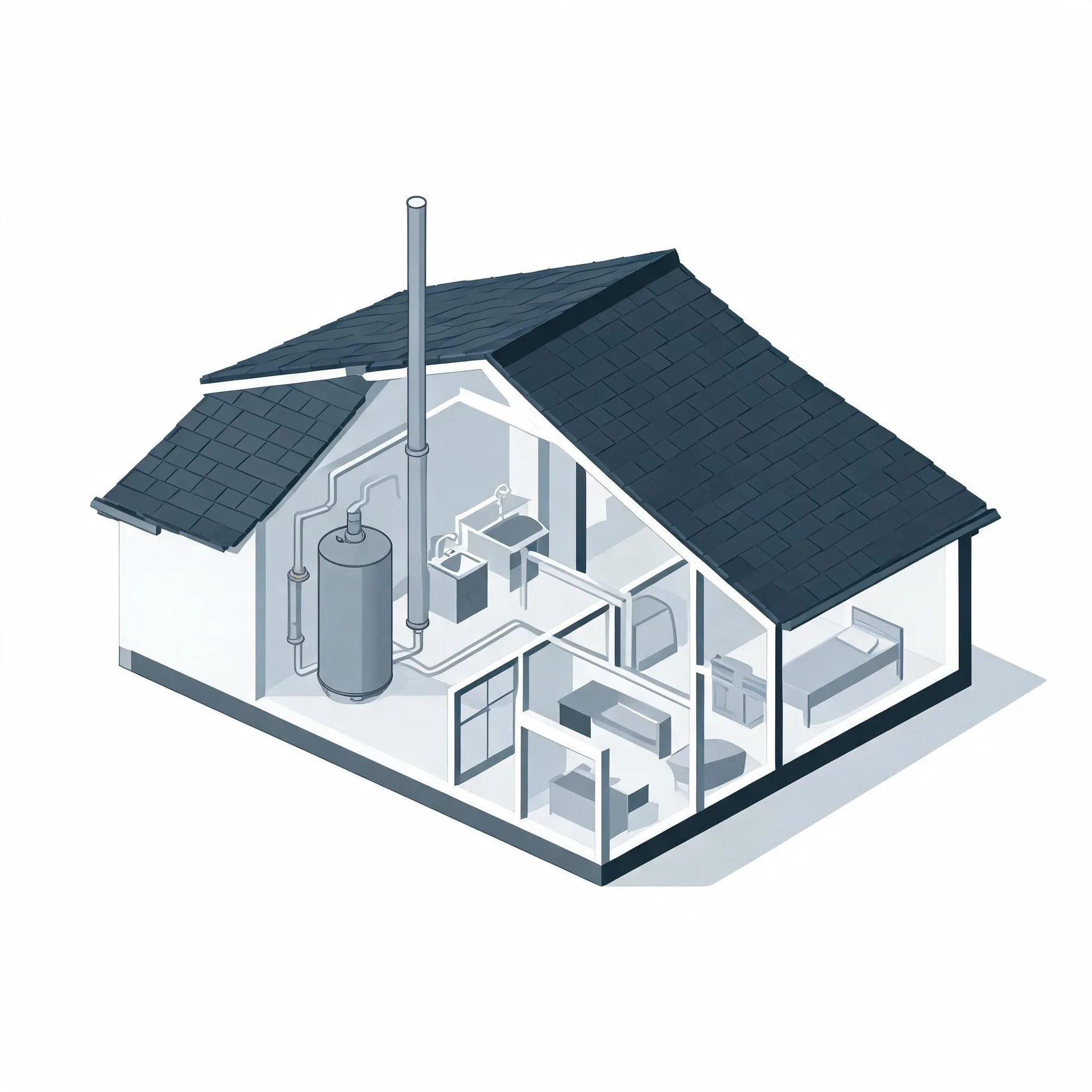
The tank is what most homeowners recognize: a large insulated cylinder, usually standing in the basement, utility room, or garage, that holds and heats a supply of water. Inside it, either a gas burner at the base or electric heating elements draw the work of keeping that water at temperature. When the tank itself or those heating elements are the source of trouble, the symptoms tend to show up as no hot water at all or water that never reaches a usable heat.
The thermostat sits on or inside the unit and tells the heating source when to fire and when to stop. The pressure relief valve mounts on the side of the tank and is a safety device that releases if pressure or temperature climbs too high. A contractor also looks at the anode rod inside the tank, the dip tube that directs cold water to the bottom, and the connections where supply lines meet the unit, since any of these can be the reason a tank leaks, corrodes, or stops performing.
The drawing shows a typical water heater layout, and a licensed contractor determines which components apply to your specific unit and installation.
Find a contractor in Belmont CountyBelmont County, by the numbers
100 severe weather events were recorded in Belmont County, Ohio between 2015 and 2024.
NOAA National Centers for Environmental Information, Storm Events Database, bulk CSV export, events 2015-01-01 through 2024-12-31.Half the homes in Belmont County, Ohio were built in 1965 or earlier (2020-2024 ACS 5-year).
U.S. Census Bureau, 2020-2024 American Community Survey 5-Year EstimatesBelmont County, Ohio holds 31,522 housing units (2020-2024 ACS 5-year).
U.S. Census Bureau, 2020-2024 American Community Survey 5-Year EstimatesOwners occupy 73.6% of the occupied homes in Belmont County, Ohio (2020-2024 ACS 5-year).
U.S. Census Bureau, 2020-2024 American Community Survey 5-Year EstimatesSevere Weather Events in Belmont County
Extreme weather puts strain on water heaters through power fluctuations, pressure changes, and temperature swings that accelerate wear. How often that happens in Belmont County shapes how hard local units work and how quickly repair needs build up.
100 severe weather events, 2016–2024. Source: NOAA National Centers for Environmental Information, Storm Events Database.