Tell us about the job
Takes about a minute. No obligation.
A water heater that stops working in Crawford County has almost certainly been let down by something other than the weather. 72 severe weather events were recorded in Crawford County, Ohio between 2015 and 2024. At that rate, severe weather is a periodic fact of life here, but it does not put the sustained thermal and mechanical load on a water heater that age and neglect do. A contractor called out for a repair will check the anode rod, the heating elements, and sediment accumulation in the tank before anything else, because those are what actually fail.
Water heaters in houses this age are rarely their first owners. Half the homes in Crawford County, Ohio were built in 1959 or earlier (2020-2024 ACS 5-year). A house that old has carried more than one water heater through its life, which means what a contractor opens is a unit installed well after the house was built, with its own service history. What decides how the repair goes is what that unit's internals look like and whether the components it requires are still manufactured. The house is not the variable.
The Parts of a Water Heater a Contractor Checks First
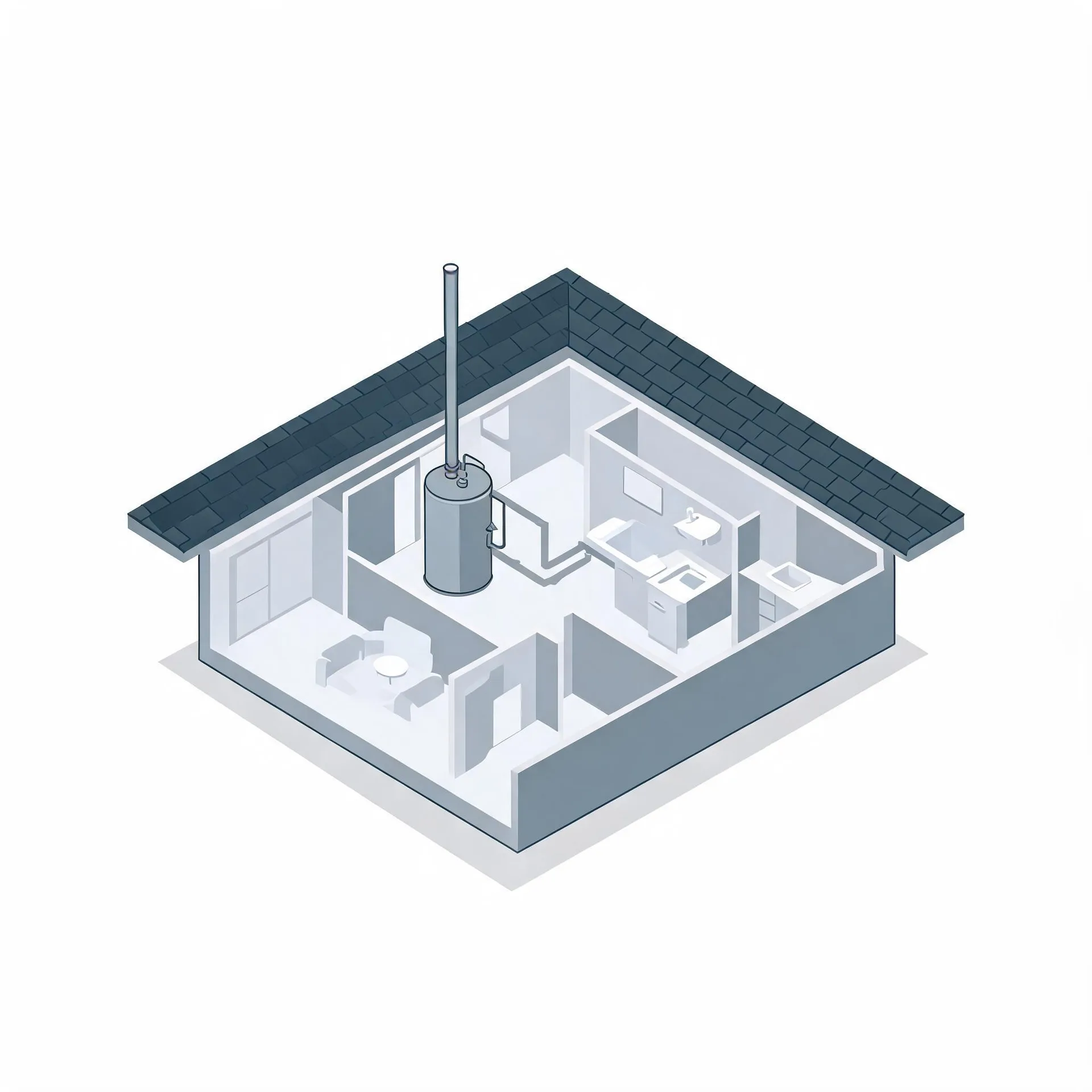
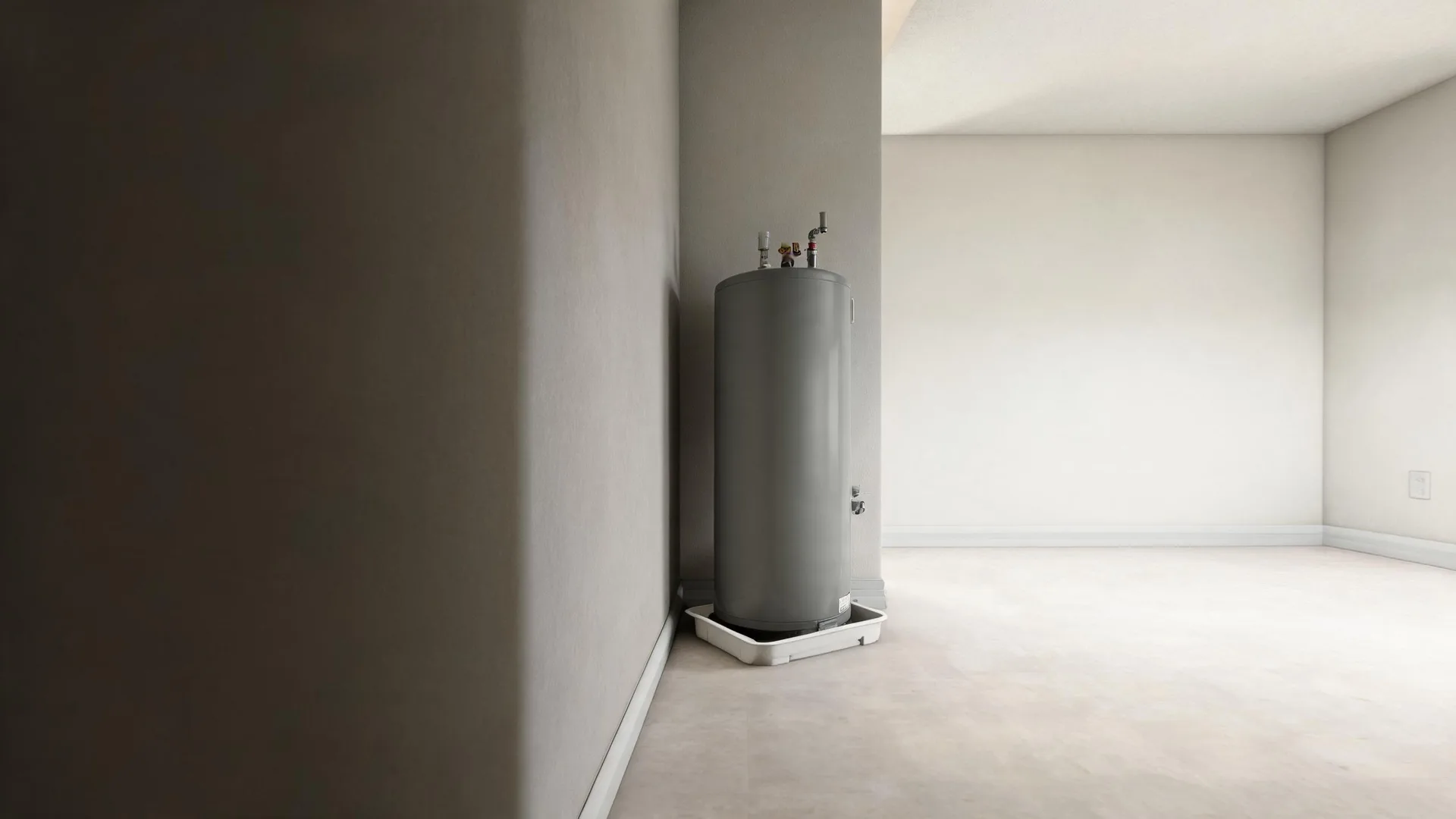
The tank is the piece a homeowner sees first, usually standing in a utility room, basement, or closet. It holds and heats the water supply for the house. When a repair call comes in, the tank itself, its insulation, and the pressure relief valve on its side are among the first things a contractor examines for damage, corrosion, or improper discharge.
The burner assembly or heating element sits at the base or interior of the tank depending on whether the unit runs on gas or electricity. The thermostat, the dip tube that directs cold water to the bottom, and the anode rod that slows internal corrosion are all internal pieces a contractor pulls or tests when the tank is losing heat, recovering slowly, or showing signs of sediment buildup.
The drawing shows a general layout of these components, and a licensed contractor determines which parts apply and what condition they are in for your specific unit.
Get matched in Crawford CountyCrawford County by the Numbers
72 severe weather events were recorded in Crawford County, Ohio between 2015 and 2024.
NOAA National Centers for Environmental Information, Storm Events Database, bulk CSV export, events 2015-01-01 through 2024-12-31.Half the homes in Crawford County, Ohio were built in 1959 or earlier (2020-2024 ACS 5-year).
U.S. Census Bureau, 2020-2024 American Community Survey 5-Year EstimatesCrawford County, Ohio holds 19,812 housing units (2020-2024 ACS 5-year).
U.S. Census Bureau, 2020-2024 American Community Survey 5-Year EstimatesOwners occupy 73.1% of the occupied homes in Crawford County, Ohio (2020-2024 ACS 5-year).
U.S. Census Bureau, 2020-2024 American Community Survey 5-Year EstimatesCodes & Standards Governing Water Heater Repair in Crawford County, Ohio14 sourced rules and standards
Licensing and Legal Requirements in Crawford County, Ohio
An Ohio home construction services contract must include a copy of the supplier's certificate of insurance showing general liability coverage of not less than two hundred fifty thousand dollars.
In Ohio a home construction service means the construction of a residential building, including the repair, improvement, remodel or renovation of an existing structure, and does not include construction on a structure containing four or more dwelling units except for work on an individual dwelling unit within it.
A home construction service supplier in Ohio is defined as a person who contracts with an owner to provide home construction services for compensation and who maintains a general liability insurance policy of not less than two hundred fifty thousand dollars.
The Ohio construction industry licensing board issues state licenses to individuals as heating, ventilating and air conditioning contractors, refrigeration contractors, electrical contractors, plumbing contractors and hydronics contractors.
An Ohio board of county commissioners may accept a valid and unexpired Chapter 4740 license held by a heating, ventilating and air conditioning contractor toward its own licensing requirements for work on one-, two-, or three-family dwelling houses.
An Ohio board of county commissioners may adopt rules licensing heating, ventilating and air conditioning contractors who are not required to hold a state license under Chapter 4740.
In Ohio municipal law a specialty contractor includes heating, ventilating and air conditioning contractors, refrigeration contractors, electrical contractors, plumbing contractors and hydronics contractors.
An Ohio board of county commissioners may not register a specialty contractor who is required to hold a license under Chapter 4740 but does not hold a valid one.
An Ohio municipal corporation may not register a specialty contractor who is required to hold a license under Chapter 4740 but does not hold a valid one.
In Ohio building law a residential building means a one-family, two-family or three-family dwelling house and any accessory structure incidental to it, and does not include an industrialized unit, a manufactured home or a mobile home.
Ohio's contractor licensing chapter reaches only work on a construction project, and a construction project is defined to exclude residential buildings, so an HVAC contractor working on a one-, two-, or three-family dwelling in Ohio falls outside the state licensing requirement.
Violating Ohio's contractor licensing prohibition is a minor misdemeanor on a first violation and a misdemeanor of the fourth degree on subsequent violations.
Under Ohio law no person may act as or claim to be a type of contractor that Chapter 4740 licenses unless that person holds a license issued under that chapter.
In Ohio a home construction service supplier may not perform a home construction service costing twenty-five thousand dollars or more without entering into a written home construction services contract with the owner, unless the supplier and owner enter into a cost-plus contract.
Severe Weather Events in Crawford County
Extreme weather puts stress on water heaters: temperature swings, power surges, and flooding all accelerate wear on equipment that runs year-round. How often those conditions hit Crawford County shapes how hard local water heaters work and how quickly problems develop.
72 severe weather events, 2015–2024. Source: NOAA National Centers for Environmental Information, Storm Events Database.