Tell us about the job
Takes about a minute. No obligation.
A water heater repair call in Seneca County starts with the unit itself. 90 severe weather events were recorded in Seneca County, Ohio between 2015 and 2024. That puts severe weather in the range of a real but ordinary background load, not the kind of relentless battering that would push components toward early failure. A contractor here will open the tank access, check the anode rod, and look for sediment at the bottom before any other explanation gets serious weight. Age and deferred maintenance account for most of what they find.
Half the homes in Seneca County, Ohio were built in 1959 or earlier (2020-2024 ACS 5-year). Water heaters in houses that old were sized and installed to serve original plumbing layouts, and the units now running in them are rarely the first or second replacement. When a contractor opens a failing heater here, the question that shapes the repair is whether the valves, elements, or controls it takes are still manufactured. If they are not, the scope changes immediately and the bill reflects it. A contractor working through older Seneca County stock checks parts availability before quoting the repair, because a unit that cannot be serviced with current parts is not a repair job.
The Parts of a Water Heater a Contractor Checks First
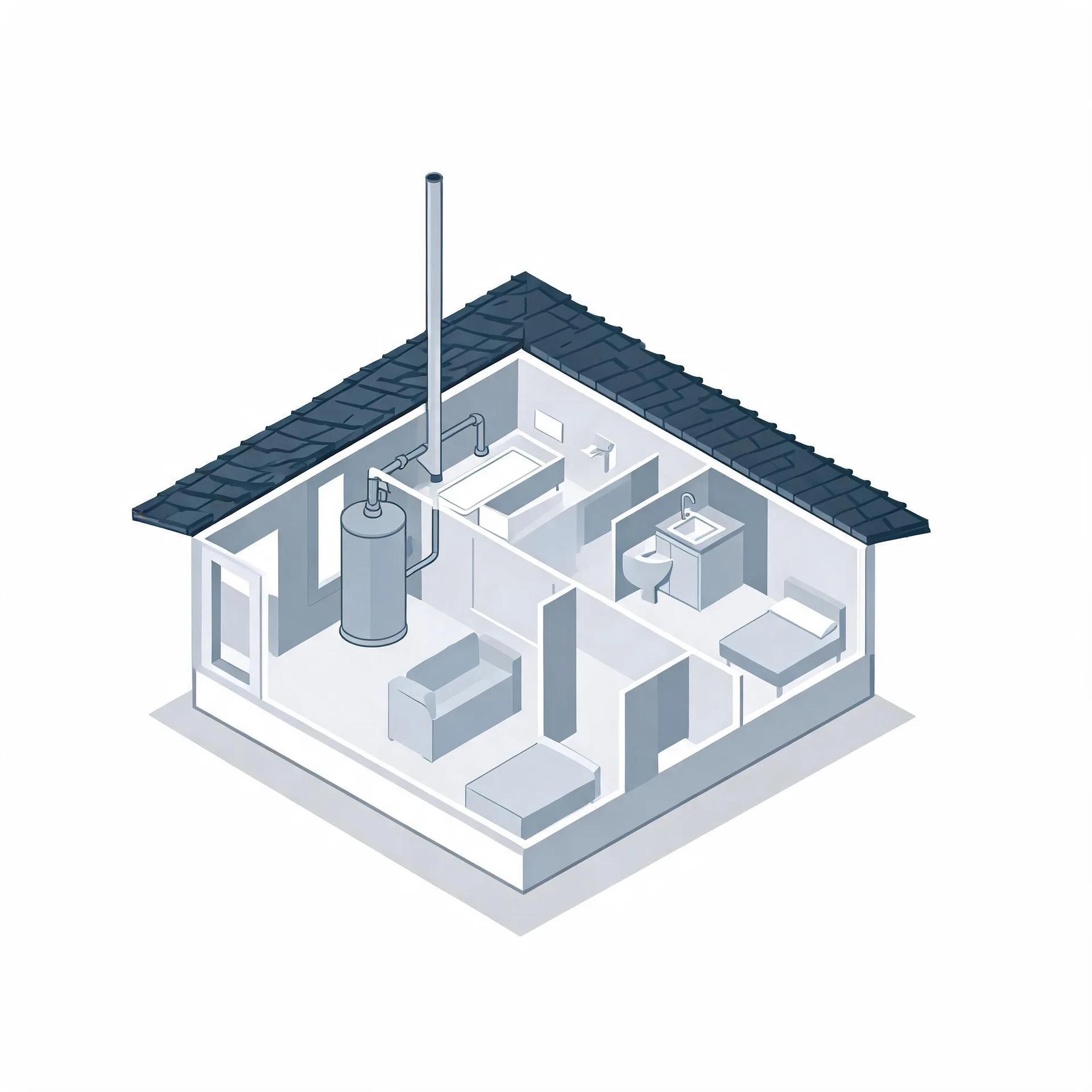
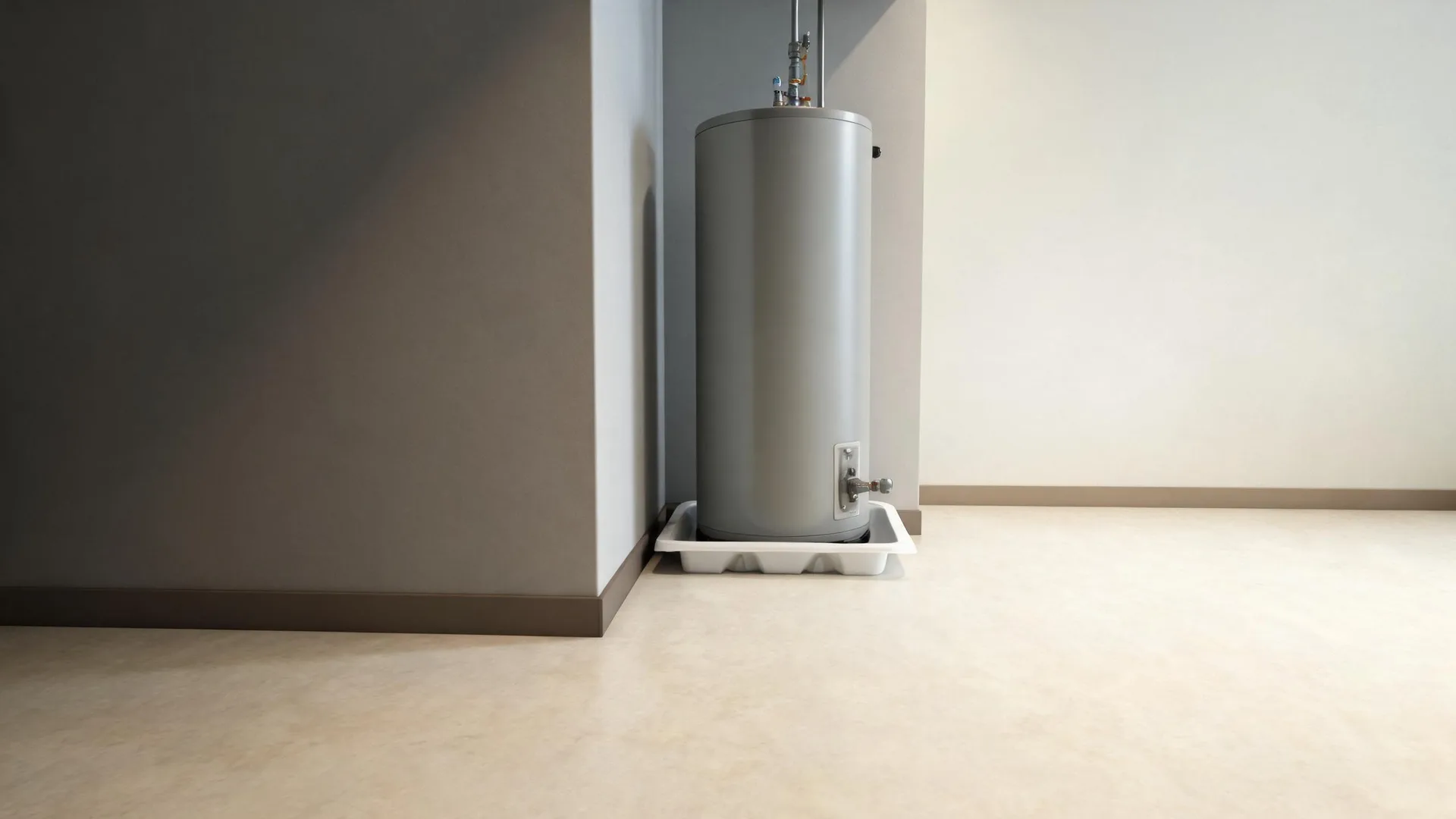
The tank is the piece a homeowner sees first, a large insulated vessel that sits in the basement, utility closet, or garage and holds water at a set temperature. A heating element or burner assembly sits inside or beneath it and does the actual heating work. When either of those is failing, the water coming out of the tap tells you before anything else does.
The thermostat mounts on the tank and controls when the heating element fires. The pressure relief valve sits on the side of the tank and opens if internal pressure builds past a safe point. The anode rod hangs inside the tank and slows corrosion of the tank walls. A contractor checks each of these when tracking down the source of a problem.
The drawing shows a general layout of these components, and a licensed contractor determines which of them apply to the specific unit and installation in your home.
Get matched in Seneca CountySeneca County, by the numbers
90 severe weather events were recorded in Seneca County, Ohio between 2015 and 2024.
NOAA National Centers for Environmental Information, Storm Events Database, bulk CSV export, events 2015-01-01 through 2024-12-31.Half the homes in Seneca County, Ohio were built in 1959 or earlier (2020-2024 ACS 5-year).
U.S. Census Bureau, 2020-2024 American Community Survey 5-Year EstimatesSeneca County, Ohio holds 23,982 housing units (2020-2024 ACS 5-year).
U.S. Census Bureau, 2020-2024 American Community Survey 5-Year EstimatesOwners occupy 73.4% of the occupied homes in Seneca County, Ohio (2020-2024 ACS 5-year).
U.S. Census Bureau, 2020-2024 American Community Survey 5-Year EstimatesRules and Standards Behind Water Heater Repair in Seneca County, Ohio14 sourced rules and standards
Licensing and Legal Requirements in Seneca County, Ohio
An Ohio home construction services contract must include a copy of the supplier's certificate of insurance showing general liability coverage of not less than two hundred fifty thousand dollars.
In Ohio a home construction service means the construction of a residential building, including the repair, improvement, remodel or renovation of an existing structure, and does not include construction on a structure containing four or more dwelling units except for work on an individual dwelling unit within it.
A home construction service supplier in Ohio is defined as a person who contracts with an owner to provide home construction services for compensation and who maintains a general liability insurance policy of not less than two hundred fifty thousand dollars.
The Ohio construction industry licensing board issues state licenses to individuals as heating, ventilating and air conditioning contractors, refrigeration contractors, electrical contractors, plumbing contractors and hydronics contractors.
An Ohio board of county commissioners may accept a valid and unexpired Chapter 4740 license held by a heating, ventilating and air conditioning contractor toward its own licensing requirements for work on one-, two-, or three-family dwelling houses.
An Ohio board of county commissioners may adopt rules licensing heating, ventilating and air conditioning contractors who are not required to hold a state license under Chapter 4740.
In Ohio municipal law a specialty contractor includes heating, ventilating and air conditioning contractors, refrigeration contractors, electrical contractors, plumbing contractors and hydronics contractors.
An Ohio board of county commissioners may not register a specialty contractor who is required to hold a license under Chapter 4740 but does not hold a valid one.
An Ohio municipal corporation may not register a specialty contractor who is required to hold a license under Chapter 4740 but does not hold a valid one.
In Ohio building law a residential building means a one-family, two-family or three-family dwelling house and any accessory structure incidental to it, and does not include an industrialized unit, a manufactured home or a mobile home.
Ohio's contractor licensing chapter reaches only work on a construction project, and a construction project is defined to exclude residential buildings, so an HVAC contractor working on a one-, two-, or three-family dwelling in Ohio falls outside the state licensing requirement.
Violating Ohio's contractor licensing prohibition is a minor misdemeanor on a first violation and a misdemeanor of the fourth degree on subsequent violations.
Under Ohio law no person may act as or claim to be a type of contractor that Chapter 4740 licenses unless that person holds a license issued under that chapter.
In Ohio a home construction service supplier may not perform a home construction service costing twenty-five thousand dollars or more without entering into a written home construction services contract with the owner, unless the supplier and owner enter into a cost-plus contract.
Severe Weather Events in Seneca County
Extreme weather puts water heaters through cycles of demand they were not sized for in a quiet week. How hard that pressure hits depends on what this area actually sees, and that shapes the repair picture for local equipment.
90 severe weather events, 2015–2024. Source: NOAA National Centers for Environmental Information, Storm Events Database.